A power outage is the most common reason people discover the emergency release cord for the first time — often when their car is stuck inside. The good news is that every electric garage door opener has a manual override built in, so you can open the door by hand. The key is using it correctly so the door doesn't come crashing down. Here's the safe step-by-step.
Step 1: Make sure the door is fully closed
Only pull the emergency release when the door is in the fully closed position. If the door is partially or fully open when you disconnect the opener, the door is no longer held by the motor and can slide down — fast. If the door is open, leave it alone until power returns or get professional help.
This single rule prevents most emergency-release injuries.
Step 2: Pull the emergency release cord
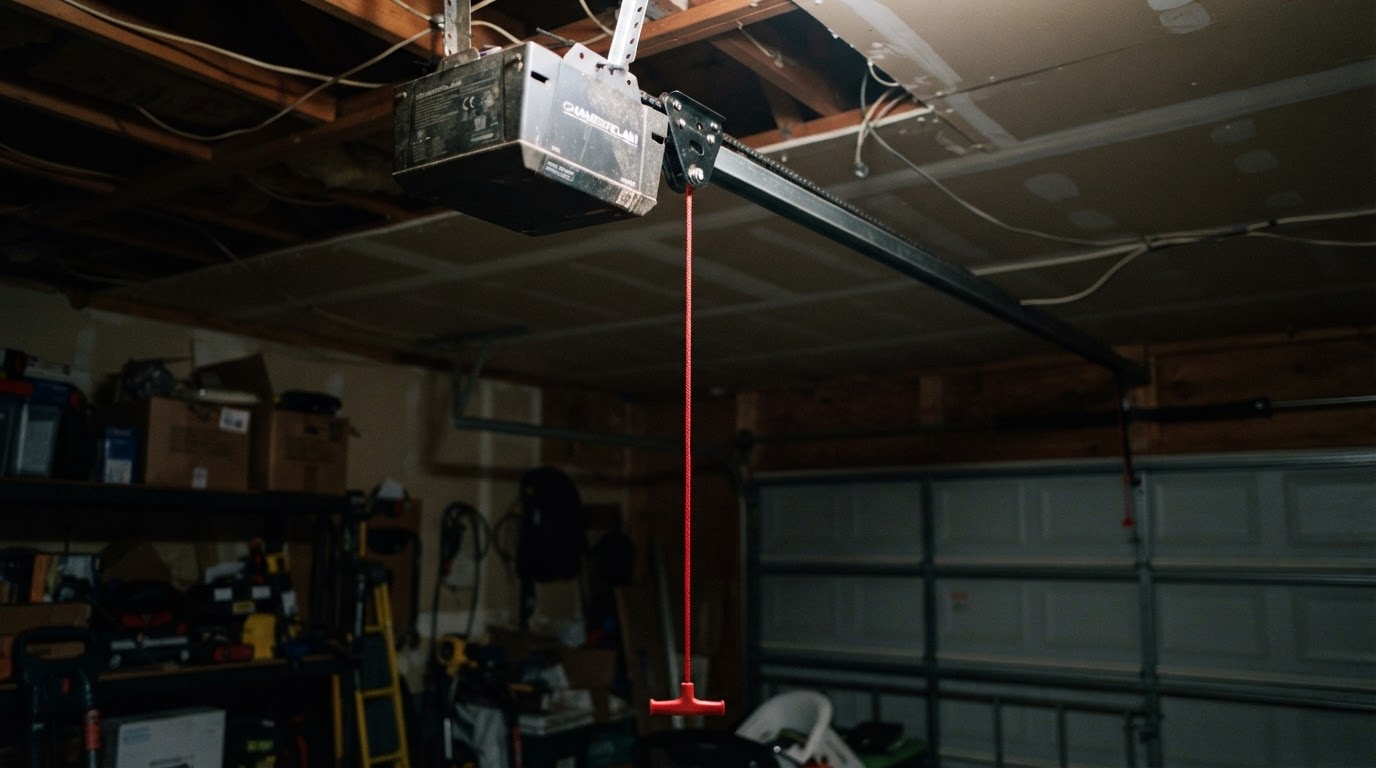
The red emergency release cord hangs from the opener carriage on the rail above the door. Pulling it straight down (or toward the door) disengages the trolley, separating the door from the opener's drive. You'll usually hear or feel a click.
Some cords have a dual-mode mechanism; a straight-down pull is the standard disengage. If you have a newer opener with a self-learning release, the exact motion may vary slightly — check the pull-tag on the cord.
Step 3: Lift the door manually
With the door disengaged, lift from the bottom (the handle or the bottom of the door). A properly balanced door should lift smoothly with modest effort and stay where you let go. If the door is extremely heavy or slams down, the springs may be worn or broken — don't force it.
Open it just enough to drive through, prop it safely if needed, and move the car. Once the car is out, you can close the door by hand from inside or leave it up if you'll be right back.
Step 4: Re-engage the opener when power returns
When the power is back, re-engaging the opener is usually simple: pull the cord toward the motor to reset the trolley, then run the opener a full cycle (open and close). On most units the trolley clicks back onto the rail automatically as the carriage moves. Until it re-engages, the remote and wall button won't move the door.
If the door behaves differently after re-engaging — jerky, uneven, or the limits seem off — the springs may need attention. Re-engaging under a heavy load can also damage the trolley, so don't force it.
When the door won't lift easily
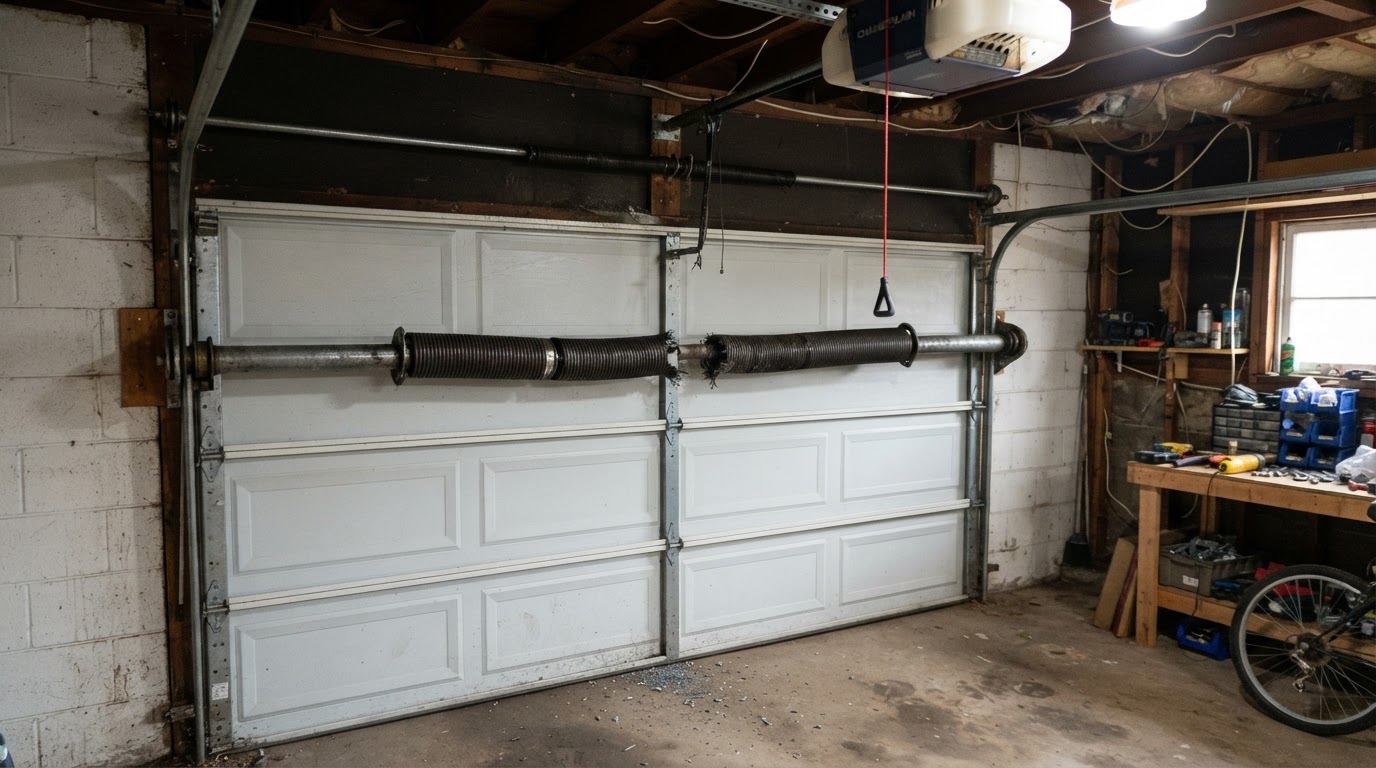
If the door feels very heavy even with the opener disengaged, that's a spring problem, not a power problem. Don't try to muscle it open. In that case, leave the door closed and call for service — the springs need replacement before the door is safe to operate by hand or by opener.
Frequently Asked Questions
Get clear of the door immediately — it can fall. If it's already down and closed, re-engage the opener by pulling the cord toward the motor and running a full cycle once power returns. If it fell and you're unsure whether anything was damaged, have a technician inspect the door and opener before using it again.

Written by
Clint Fields
Clint Fields is the owner and lead technician at Door Fellas Garage Door Service in New Orleans. He works hands-on with garage doors across the Greater New Orleans area every day — from torsion spring replacement and opener installation to routine maintenance and emergency repairs — and writes these guides to help homeowners understand their doors and know when it's time to call a professional.
Talk to Clint's team — +15042520233Last reviewed October 27, 2026