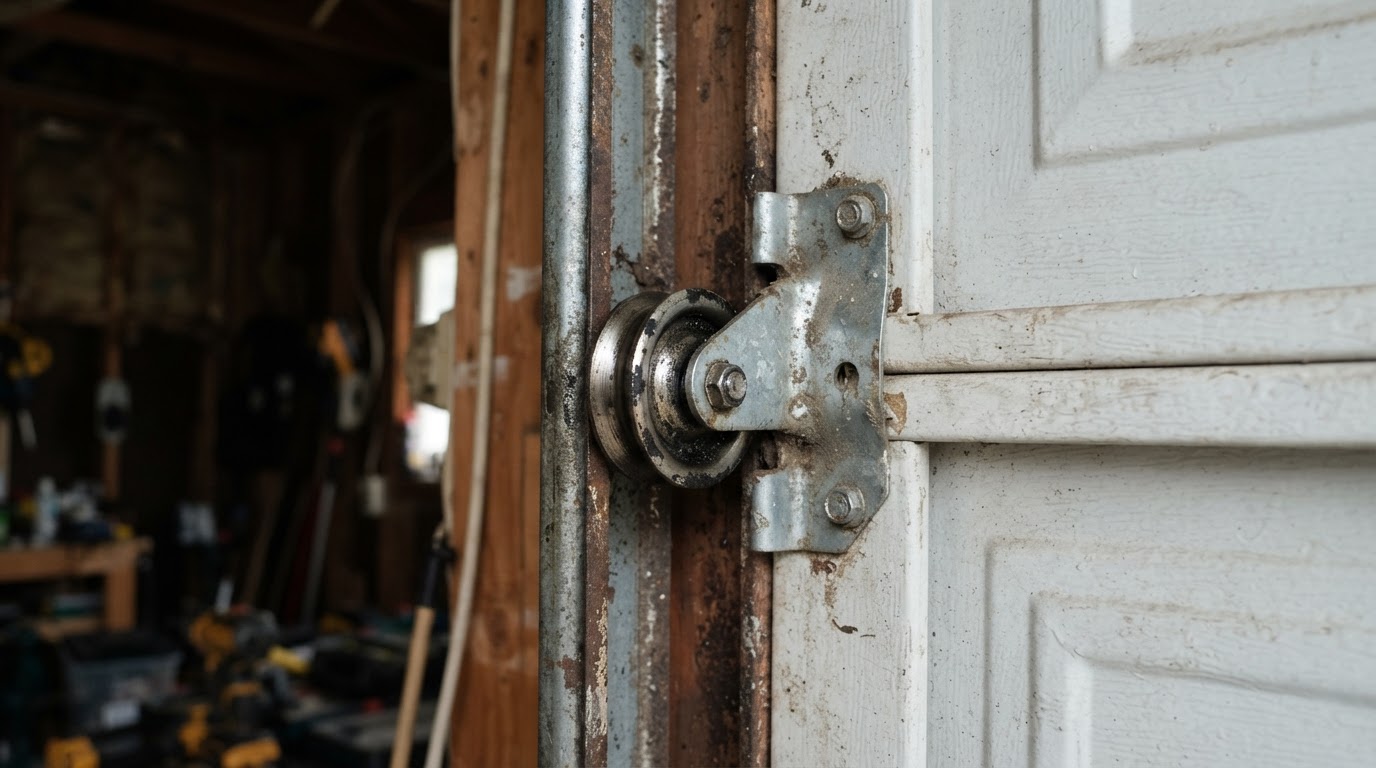
A garage door that screeches, squeaks, or grinds every time it opens is more than annoying — it's the system telling you something needs attention. Most often the fix is simple maintenance, but a grinding sound can also point to a part that's wearing out and about to fail. Knowing the difference helps you decide whether a can of lubricant will do the job or whether it's time to call a technician.
Dry rollers and hinges (the most common cause)
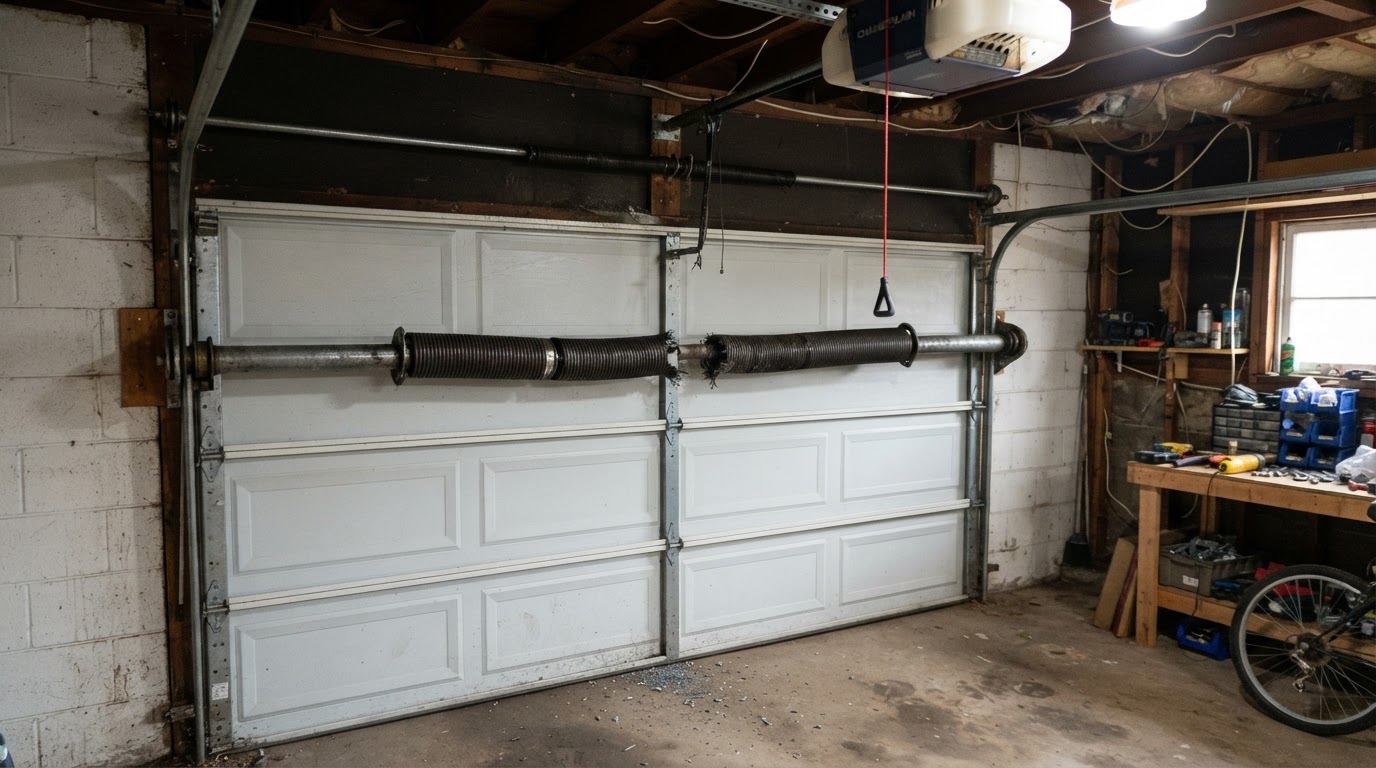
Metal-on-metal friction is the #1 cause of screeching. The rollers, hinges, and spring coils all need periodic lubrication, and when they run dry they squeal and grind. This is almost always the first thing to address, and it's the most likely culprit if the noise has been building up gradually.
Lubricating the right parts (and avoiding the wrong ones) quiets most doors within a cycle or two. See our lubrication guide for the specific parts to lube — and what to leave alone.
Worn rollers
If the noise persists after lubrication, the rollers themselves may be worn. Metal rollers develop flat spots or pitting, and nylon rollers can crack or chunk. Worn rollers grind against the track and can make a harsh, rhythmic noise as each one passes a bad spot.
Worn rollers also accelerate track wear and put extra load on the opener. Replacing them — often with quieter nylon rollers — is a common, worthwhile upgrade that makes a noticeable difference.
Misaligned or bent track
If a vertical track is bent or the track sections are out of alignment, the rollers pinch and grind as they pass the problem spot. You may also see the door wobble or shift sideways. A bent track often comes from an impact (like backing into the door) and should be straightened or replaced rather than forced.
Running a door on a misaligned track can pop rollers out and damage the door panels, so it's worth having it corrected.
Opener drive noise
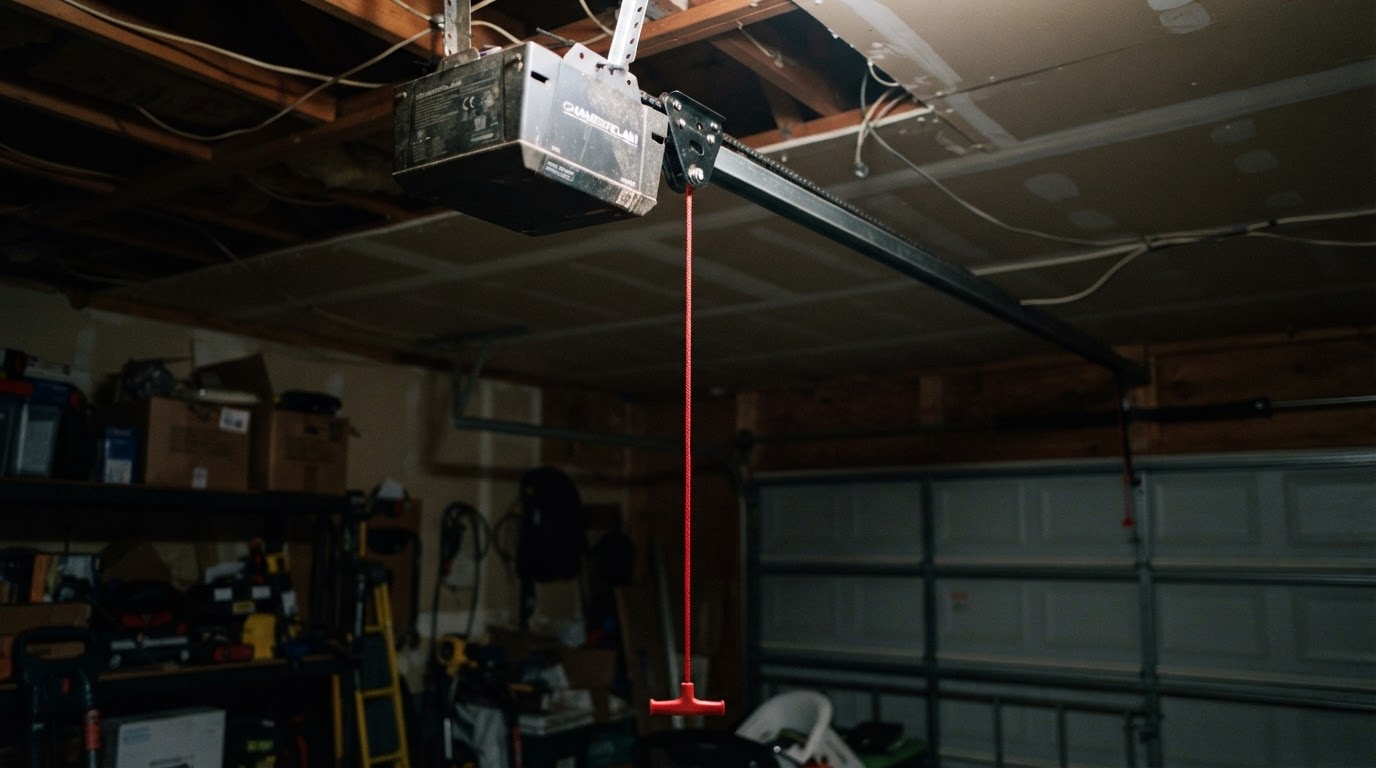
If the grinding seems to come from the opener motor head rather than the door itself, the chain, belt, or screw drive may be dry, loose, or worn. A loose chain slaps and grinds; a dry screw drive can howl. Chain-drive openers are inherently the loudest type, so some noise is normal, but a new or worsening grind from the motor head is worth checking.
When to call a professional
If lubrication doesn't quiet the door, or if you see bent track, cracked rollers, or loose cables, a technician can identify the failing part and replace it before it causes a bigger problem. A noisy door is often an early warning — addressing it now is cheaper than waiting for a breakdown.
Frequently Asked Questions
Usually not immediately, but it's a warning sign. Dry or worn parts fail faster, and a grinding noise can indicate a part close to breaking. It's worth addressing before it turns into a door that won't open or a broken spring.

Written by
Clint Fields
Clint Fields is the owner and lead technician at Door Fellas Garage Door Service in New Orleans. He works hands-on with garage doors across the Greater New Orleans area every day — from torsion spring replacement and opener installation to routine maintenance and emergency repairs — and writes these guides to help homeowners understand their doors and know when it's time to call a professional.
Talk to Clint's team — +15042520233Last reviewed October 23, 2026