It's a frustrating moment: you press the button, the opener motor hums for a few seconds, and… nothing. The door doesn't move. That hum tells you the motor is getting power, but something is stopping it from doing its job. Here are the most common reasons it happens and a safe order for checking them.
First, check for a broken spring
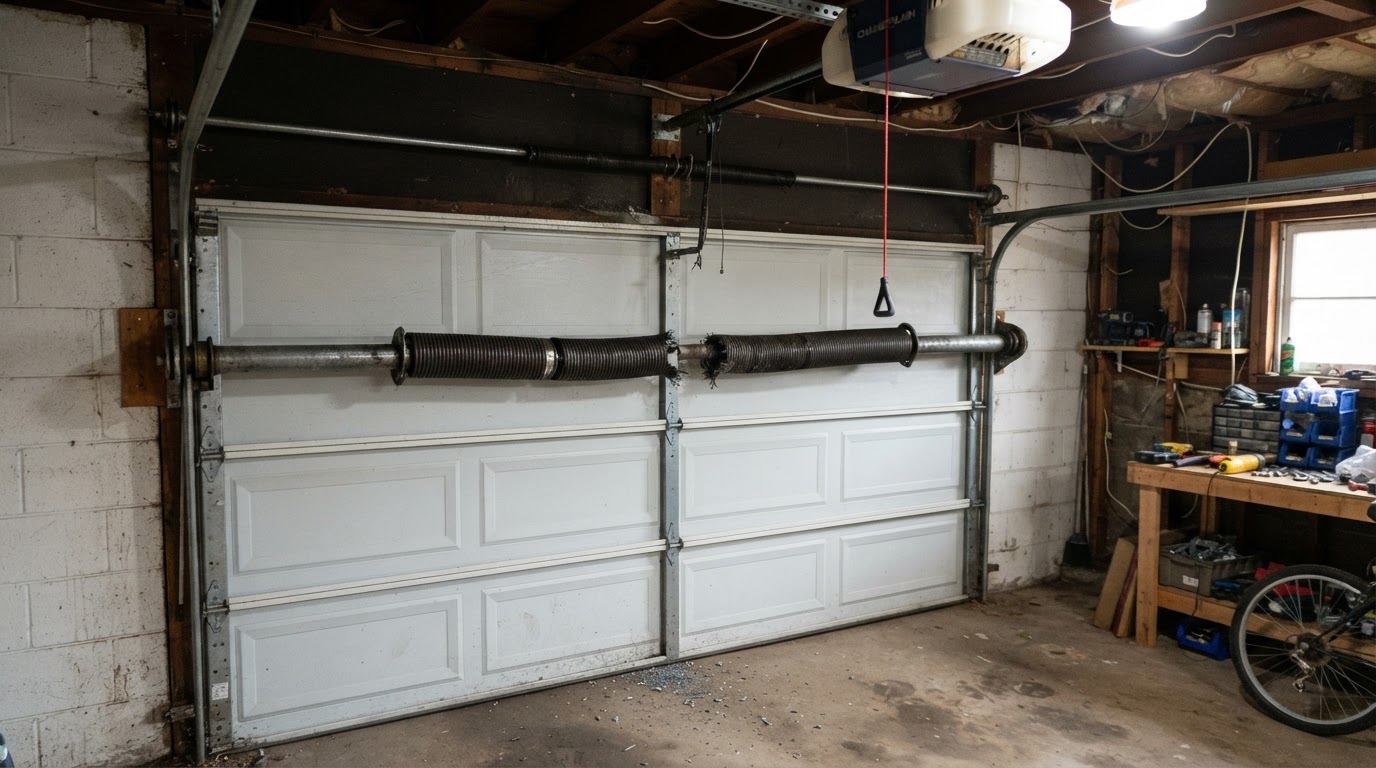
This is the most important check, because it's both the most common cause and the one where using the door can be dangerous. When a torsion or extension spring breaks, the opener suddenly has to lift the full weight of the door by itself — which it can't do. The motor strains and hums, but the door won't move.
Look up at the spring for a visible gap, and try the manual-lift test described in our spring guide. If the door is extremely heavy by hand, the spring is the problem. Stop using the door and call a professional; spring replacement is not a DIY job.
Check that the door isn't locked or obstructed
It sounds simple, but a manual lock on the door (a slide lock or T-lock) will hold the door in place no matter what the opener does, and the motor will hum against it. Make sure any manual locks are disengaged.
Also confirm nothing is physically blocking the door's path and that the door isn't frozen or jammed at the bottom seal.
Inspect the gears or drive mechanism
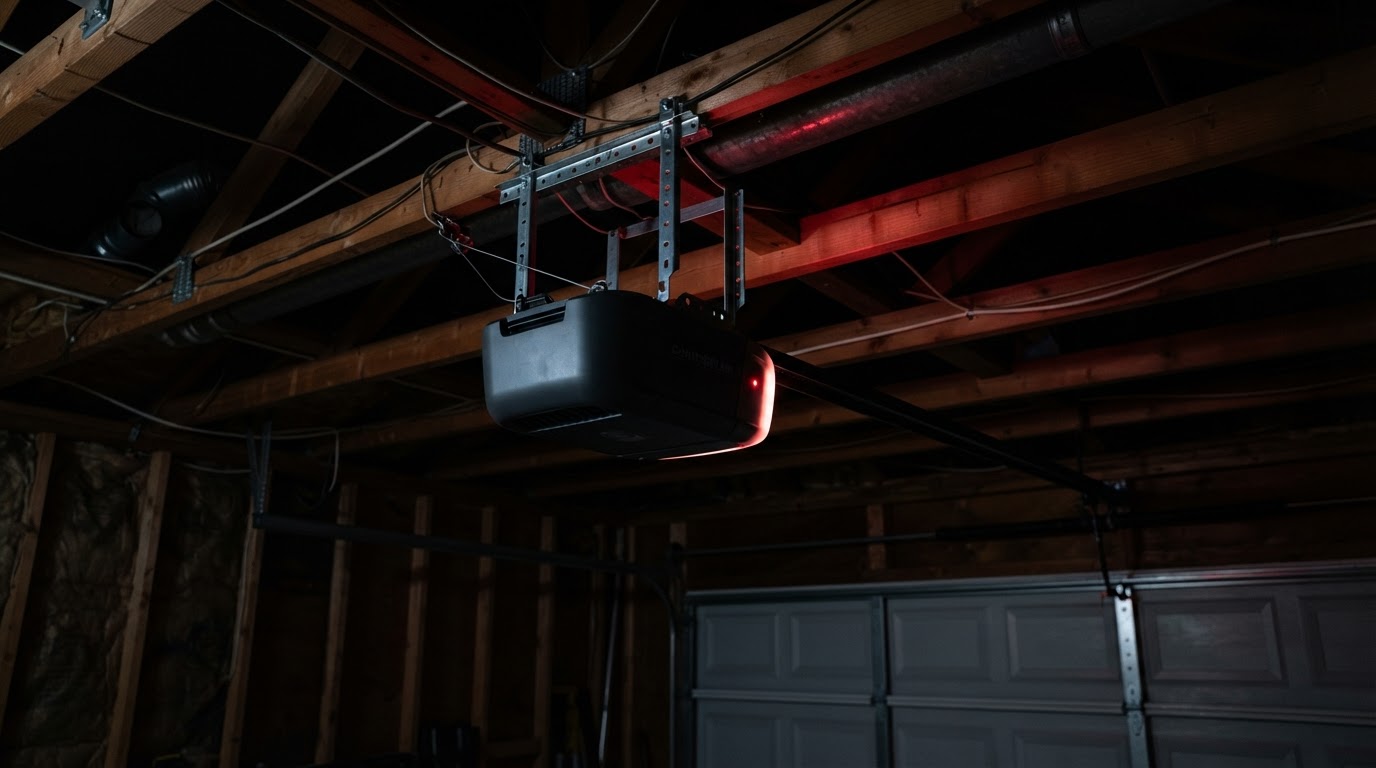
If the springs are fine and the door moves freely by hand, the problem is likely inside the opener. A common failure is a stripped or broken gear — especially in older screw- or chain-drive units. The motor spins, you hear the hum, but the broken gear can't transfer that motion to the drive.
Worn gears can sometimes be heard as a grinding sound along with the hum. This is an internal opener repair that typically requires a technician.
Check the capacitor
The starter capacitor gives the motor the boost it needs to start moving under load. When it fails, the motor often hums but can't start turning the door. A bad capacitor can also cause the motor to overheat and trip its thermal protection, shutting down after a few seconds.
Capacitors store a charge even when unplugged, so testing and replacing one is best left to a technician with the right tools.
Look at the trolley and emergency release
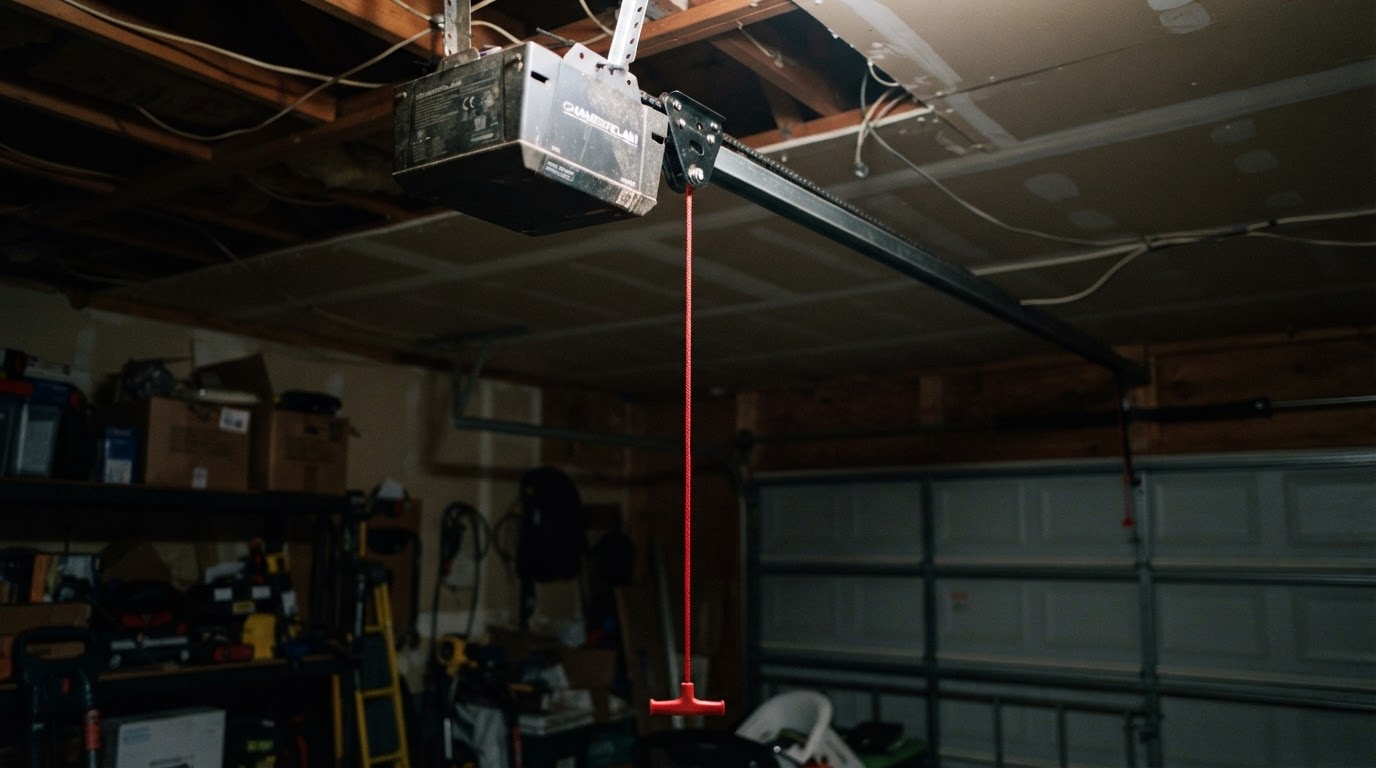
If the red emergency release rope was pulled, the trolley may be disconnected from the rail, so the motor runs but isn't connected to the door. Re-engaging the trolley (usually by running the opener until it clicks back onto the rail) can resolve this.
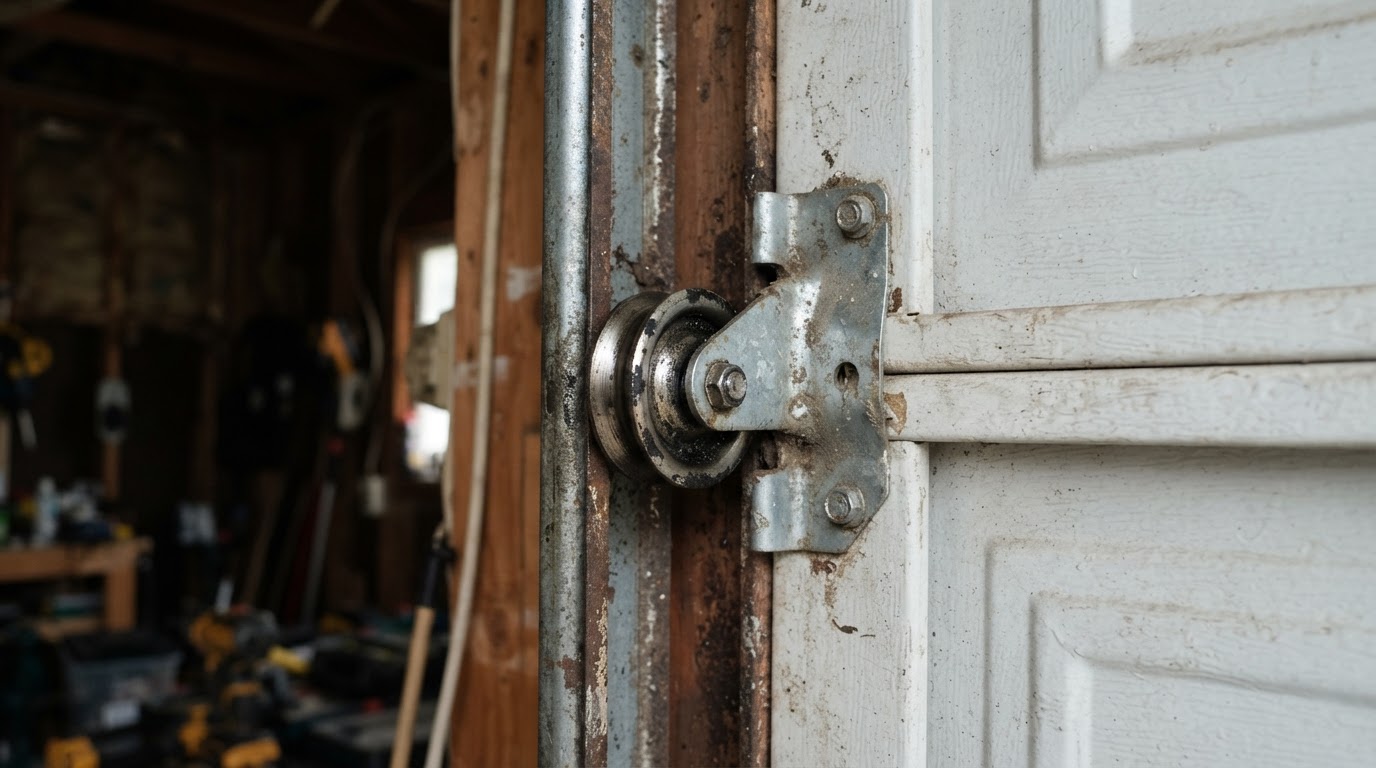
If the trolley is engaged but the carriage is worn or the chain/belt is broken or jumped off its sprocket, the motor will spin without moving the door.
When to call a pro
If the springs are intact, the door moves freely by hand, and re-engaging the trolley doesn't help, the issue is almost certainly inside the opener motor head — gears, capacitor, or the logic board. These involve mains power and stored charge and aren't safe DIY repairs.
A technician can diagnose whether the opener is worth repairing or whether a replacement makes more sense, especially for older units where parts may be hard to find.
Frequently Asked Questions
No. Letting the motor hum repeatedly can overheat it and trip the thermal switch, or cause additional damage if the cause is a broken spring or stripped gear. Run it once to confirm the symptom, then stop and investigate or call a technician.

Written by
Clint Fields
Clint Fields is the owner and lead technician at Door Fellas Garage Door Service in New Orleans. He works hands-on with garage doors across the Greater New Orleans area every day — from torsion spring replacement and opener installation to routine maintenance and emergency repairs — and writes these guides to help homeowners understand their doors and know when it's time to call a professional.
Talk to Clint's team — +15042520233Last reviewed October 10, 2026